






We’ve all stood in the paint aisle at Lowe’s, Home Depot, or a local paint store and just stared at rows of house paint. What’s the actual difference between all these cans? What sheen do you even need? Will that color look the same on the little swatch under store lighting as it does on your wall at home? And what’s actually different between a $20 gallon and a $50 gallon, can’t you just go with the cheap one since it’s only inside your house anyway?
Every one of those questions is a fair one, and we hear versions of all four almost every week. Here’s what actually matters, and what doesn’t.
Sheen is how much a paint’s finish reflects light once it’s dry, and it’s the single biggest source of confusion in that aisle. Here’s the short version, room by room.
Flat or matte hides imperfections better than anything else, which makes it a strong pick for ceilings and low-traffic formal spaces like a dining room. The tradeoff is durability. Flat paint scuffs and marks more easily and is harder to wipe clean, so it’s not the move for a hallway your family walks through fifty times a day.
Eggshell splits the difference, a soft, low glow that hides minor wall flaws while standing up to light cleaning. It’s become the default for most living rooms and bedrooms for exactly that reason.
Satin adds a noticeably smoother, more washable finish, which makes it the right call for hallways, kids’ rooms, and any high-traffic wall that’s going to pick up hand prints and scuffs over time.
Semi-gloss and gloss are built for moisture and repeated cleaning. Kitchens, bathrooms, trim, and doors all benefit from that extra durability, though gloss shows every roller mark and wall imperfection, so surface prep matters more as the sheen goes up.
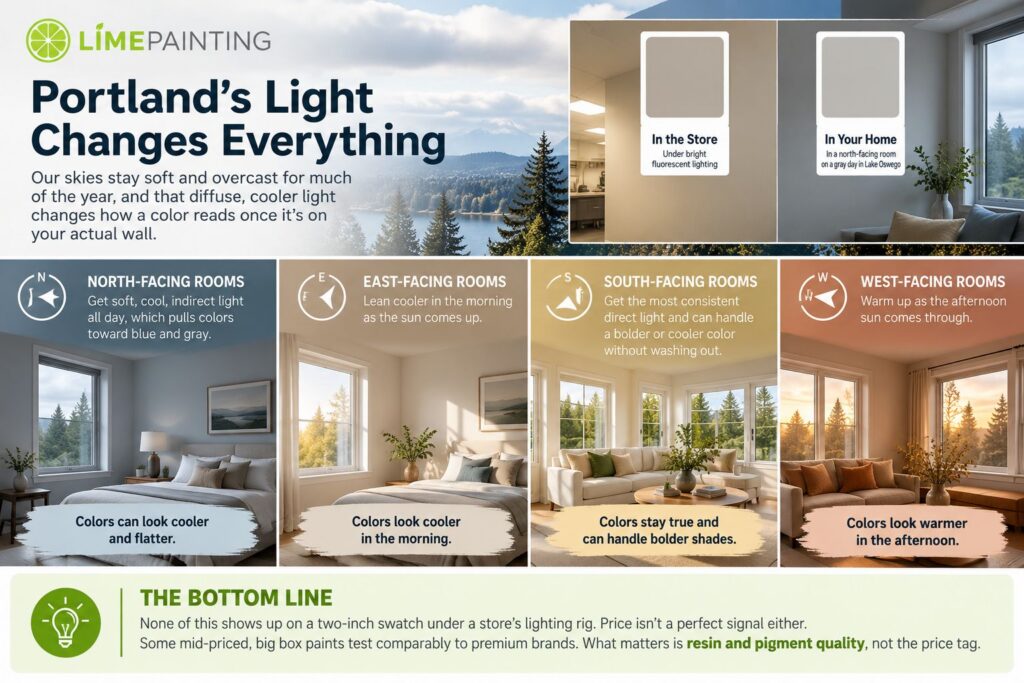
This one isn’t in your head, and it isn’t a mistake on your part. Portland’s light is genuinely different from the bright, direct sunlight most paint displays are designed under. Our skies stay soft and overcast for a big stretch of the year, and that diffuse, cooler light changes how a color reads once it’s on your actual wall. A warm greige that looked perfectly balanced under store fluorescents can shift noticeably cooler and flatter once it’s up in a north-facing room here in Lake Oswego on a gray February afternoon.
Room orientation compounds this. North-facing rooms get soft, cool, indirect light all day, which pulls colors toward blue and gray. South-facing rooms get the most consistent direct light and can handle a bolder or cooler color without washing out. East-facing rooms lean cooler in the morning, west-facing rooms warm up as the afternoon sun comes through. None of that shows up on a two-inch swatch under a store’s lighting rig.
The fix is simple, if a little slower than most homeowners want it to be. Buy a sample, paint a large section of poster board rather than a patch directly on the wall, and move it around the room at different times of day. A color that looks right at 10am can look completely different by 6pm in the same room.
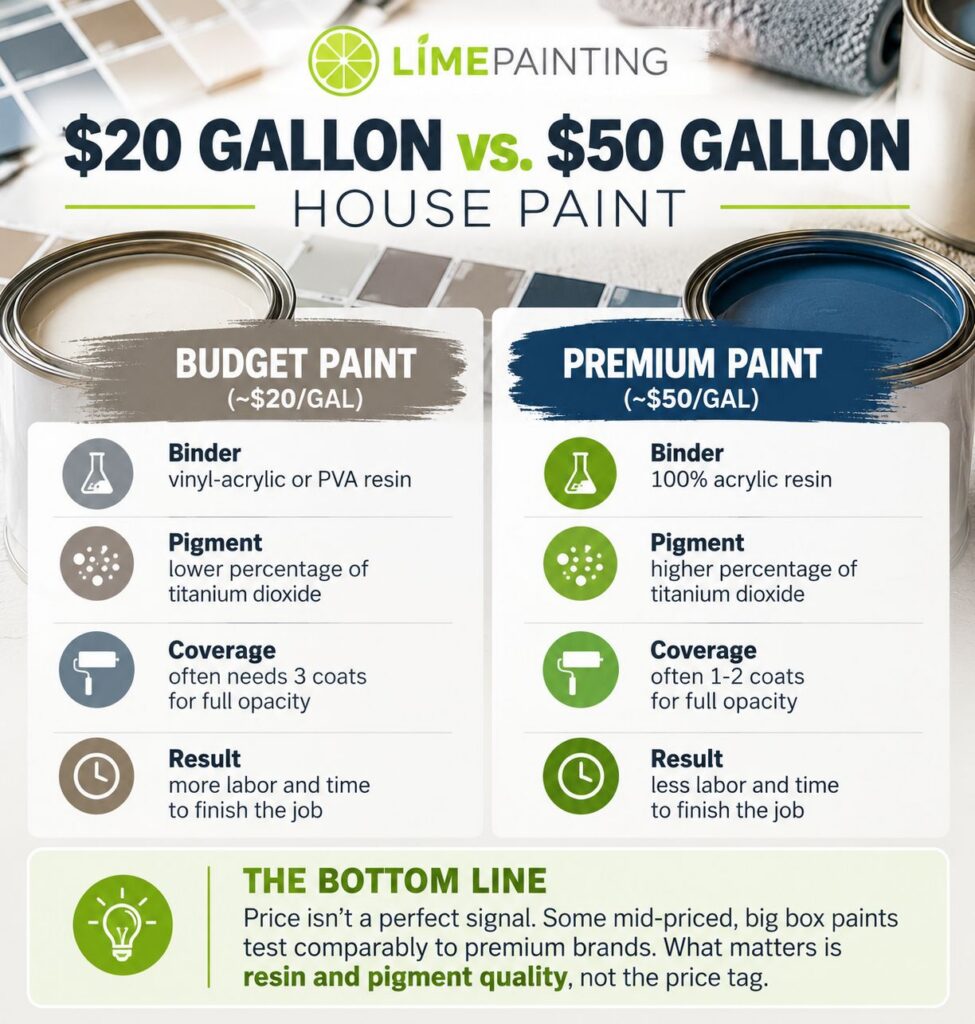
Usually, yes, though not always for the reason people assume. The price difference mostly comes down to two ingredients: the resin, which is the binder holding the paint together, and the pigment, which gives it color and coverage. Cheaper paints typically use vinyl-acrylic or PVA binders and a lower percentage of titanium dioxide, the pigment responsible for opacity. Better paints lean on 100% acrylic resin and a higher pigment load, which is why a premium paint often covers a dark wall in one coat while a budget can needs three.
That coverage difference matters more than most people expect. A paint that needs three coats instead of one costs more in labor and time even if the can itself was cheaper, which is why the cheapest option on the shelf isn’t automatically the cheapest project.
One honest caveat here: price alone isn’t a perfect signal. Independent testing has found a few mid-priced, big box store paints performing right alongside far more expensive options. What actually matters is the resin and pigment quality, not the brand name on the can. If you’re unsure, ask what the sheen is built on and how many coats it typically takes for full coverage. A contractor or paint counter that can’t answer that clearly is telling you something.
This is the question we get pushed back on the most, and it’s worth addressing directly. Interior surfaces don’t face rain, sun, or freeze-thaw cycles the way an exterior does, that part’s true. But interior walls take a different kind of beating: hands, shoulders, furniture, kids, pets, cleaning products, kitchen grease, and bathroom humidity, day after day, for years. A hallway wall gets touched more in a month than most exterior siding gets touched in a decade.
Lower quality resin holds up worse to that kind of repeated contact and cleaning, showing burnishing, staining, and dulling well before a higher quality finish would. Going cheap inside doesn’t save you from a redo, it just moves the redo indoors, usually sooner than you’d expect for a room you actually spend time in every day.
Start with the room’s job. A ceiling and a mudroom have completely different needs, so let function decide sheen before color ever enters the conversation. From there, sample your top two or three colors on poster board, not directly on the wall, and live with them in the actual room for a few days before committing. Watch how each one shifts from morning to evening, and don’t be surprised if the color that looked boldest in the store reads much softer once it’s up.
If narrowing it down still feels like guesswork, that’s normal, and it’s exactly what a color consultation is for. We offer complementary color consultations as part of our proposal process, so you’re not staring at a wall of swatches trying to guess how they’ll actually look in your own light.
Ready to stop guessing and start seeing your colors in your own home? Give us a call and we’ll walk your space with you and help you land on the right sheen and color before a single coat goes on.
Semi-gloss or satin holds up best against moisture and repeated cleaning in bathrooms and kitchens. Flat and eggshell finishes absorb humidity and stains more easily, which makes them a poor fit for those rooms.
Lighting is the main reason. A small swatch under bright store lighting doesn’t reflect how a color will read under your room’s actual natural light, and room orientation, north, south, east, or west facing, changes that even further. Sampling a color directly in your space at different times of day gives a far more accurate picture.
Usually, though not always by price alone. Better paints typically use higher quality acrylic resin and a higher percentage of titanium dioxide pigment, which improves coverage and durability. A few mid-priced, big box store paints have tested comparably to premium brands, so resin and pigment quality matter more than the price tag itself.
A higher quality paint often covers in one or two coats, while a lower quality paint can take three or more to fully hide the previous color. Dark to light color changes almost always need at least two coats regardless of paint quality.
Yes. Paint a large section of poster board rather than the wall itself, then move it around the room and view it at different times of day. A color can look noticeably different in morning light than it does by evening.
Interior walls face constant contact from hands, furniture, cleaning, and daily wear even without weather exposure. Lower quality paint shows staining, dulling, and burnishing sooner under that kind of repeated use, so cutting corners indoors often means an earlier repaint rather than real savings.
Interior paint typically lasts longer than exterior paint since it isn’t exposed to weather, often ten years or more with normal use and occasional touch ups. High-traffic areas like hallways and kids’ rooms tend to need attention sooner than a formal living room or bedroom.
Light Reflectance Value, or LRV, measures how much light a paint color reflects versus absorbs, on a scale from zero to one hundred. A higher LRV reflects more light and reads brighter, which is useful information for a room that already gets limited natural light.
Flat hides imperfections best but cleans the least easily. Eggshell offers a soft, low glow with moderate cleanability. Satin is more washable and works well on high-traffic walls. Semi-gloss and gloss stand up to moisture and repeated cleaning, making them the right call for kitchens, bathrooms, and trim.
Paint a large piece of poster board rather than a patch directly on the wall, so you can move it around the room and compare it against different walls and lighting throughout the day. Viewing it in both morning and evening light before committing prevents most color regret.
Primer helps paint adhere evenly and can reduce the number of coats needed, especially over a drastic color change, bare drywall, or a repair patch. Many premium paints include primer built in, though a separate primer coat is still worth it for major color shifts or uneven surfaces.