





Take a walk through Broken Top, Tetherow, or Awbrey Butte. The level of craftsmanship jumps right at you instantly. We are talking about custom-milled trim, hand-selected cedar siding, and the intricate architectural lines that took serious investment to build. But if you try to give one of these custom properties an exterior painting the exact way you’d spray a standard home, shortcuts scream at you instantly.

Reality is far different; the actual liquid paint in the can is only a small proportion of the story. The real success of a high-end project is decided a long time ago, before a brush even touches the siding. It’s all about giving obsessive care to those architectural details that budget painters tend to rush right past. On a custom Central Oregon home, whether it’s a full-time residence or a vacation property near Sunriver or Black Butte Ranch, those instant steps don’t stay hidden for too long, and this is why collaborating with a professional Central Oregon painting contractor is so important.
A conventional off-the-shelf paint from a local hardware store won’t cut it on custom homes. A high-end exterior needs highly specialized and durable coatings. Depending on how your house was made, you might be needing a heavy-duty elastomeric coating to keep stucco intact and sealed, a highly breathable finish made specifically for wood siding, or a specialized masonry sealer for natural stone accents. Every surface demands a specific approach to look highly incredible and survive the elements.
Elaborate crown molding, dentil trim, custom shutters, and multi-tone color schemes show up on a lot of custom builds, and none of it forgives a rushed crew. Painters working against a deadline tend to cut corners exactly where a home can least afford it, on the details that require patience and a steady hand-brush rather than a sprayer. Ironically, those are the first things a homeowner’s eye goes to.
You rarely see a stunning custom estate painted in a basic, off-the-shelf shade. When we talk about luxury home exterior painting, we are looking at color planning that treats the entire property as a canvas. It accounts for your roofline, the natural stone accents, the way the high desert light hits each side of the house, and even your landscaping. The goal is to make the final colors look completely intentional, complementing the home’s architecture instead of fighting against it.
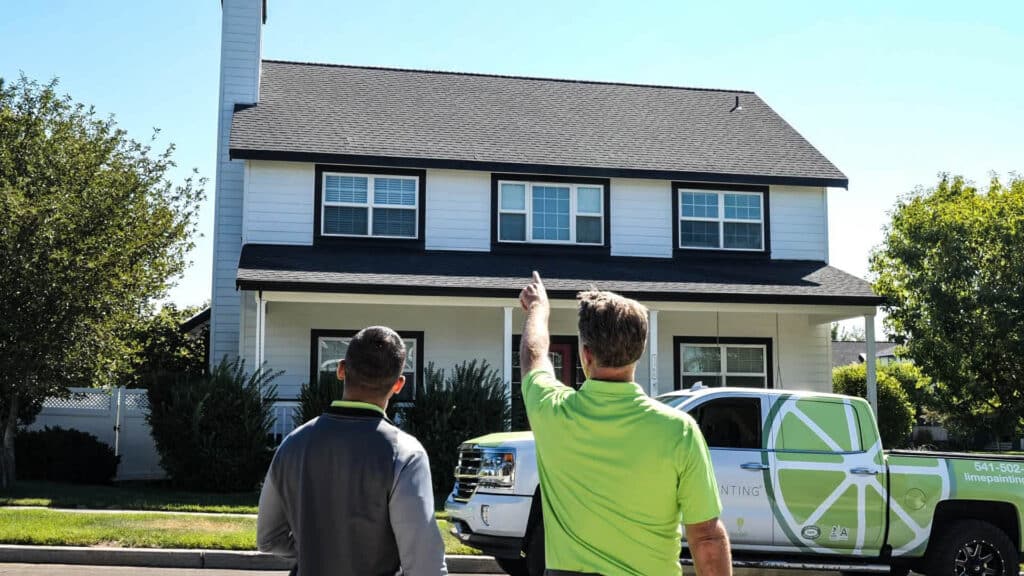
Wondering if it’s time? A handful of warning signs typically show up well before the damage turns serious, or expensive.
Run your hand along your siding. If a chalky white residue rubs off on your fingers, your paint’s protective barrier is breaking down, not just fading. On premium materials like cedar or fiber cement, this chalking is the very first stage of actual weathering, and Central Oregon’s intense high desert UV exposure speeds it up compared to milder, lower-elevation climates.
Trim ages faster than almost anything else on the house. Once window frames, columns, and railings start looking soft-edged and dull instead of crisp, the whole property loses the sharpness that made it stand out to begin with.
South- and west-facing walls take the brunt of direct sun. When those sides look noticeably duller or patchier than the shaded parts of the house, that’s genuine sun damage at work, not a shadow playing tricks in the late afternoon.
Homes in our region deal with weather cycles that degrade paint far more quickly than in other parts of the country. Central Oregon’s high desert climate sits at elevation on the dry side of the Cascades, which means significantly more direct UV exposure than lower, milder parts of the country ever see.
Then, summer brings dramatic temperature swings between hot afternoons and cold nights, and, increasingly over the last few years, wildfire smoke and ash that settle deep into porous, unprotected paint. NOAA’s National Weather Service tracks these intense seasonal swings, and its data helps explain why local homes often show wear much faster than the standard five-to-ten-year repainting estimate suggests.
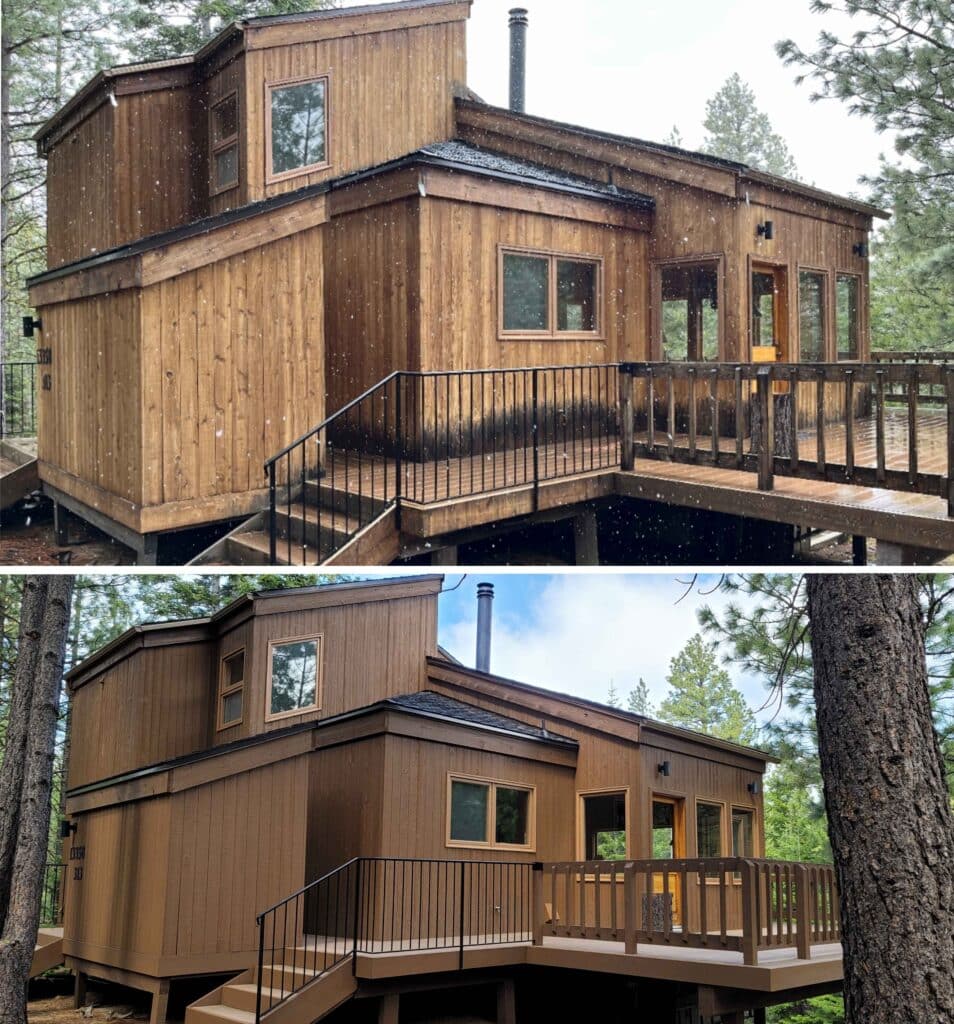
A perfectionist paint job moves at a slow speed, more deliberate and careful than a standard high-volume repaint. Here’s what a professional and high-end process will actually look like:
Finding hidden issues early: A thorough ground-up inspection of the entire exterior, looking for mold, soft wood, or even compromised seams.
Protecting your property: Careful masking around landscaping, hardscaping, windows, light fixtures, and any outdoor living areas before a drop of paint moves.
Tailoring the preparation: Prep work matched to whatever material is actually on your walls, not a one-size-fits-all pressure wash.
Planning around wildfire season: For projects scheduled during peak smoke season, we may adjust timing or add an extra wash before final coats to keep ash and soot out of the finish.
Slowing down for details: Several even coats, with real attention paid to clean lines and architectural trim, not just quick coverage across the flat wall space.
The final inspection: A detailed walkthrough together to confirm color accuracy, clean lines, and overall finish quality before we call the project done.
A meaningful share of Central Oregon’s luxury properties sit in Sunriver, Black Butte Ranch, or Eagle Crest and aren’t occupied full time. That makes premium coatings even more important, since nobody is walking the exterior every week to catch an early crack or a soft spot before it spreads. A quality paint job on a second home should hold up through a full high desert season, sun, snow, and everything in between, with less hands-on upkeep required between visits.
Central Oregon has grown quickly, so most homes here are newer than the region’s original neighborhoods. But if your home sits in one of the older pockets, like Old Bend, or an established part of Redmond, Sisters, or Prineville, and was built before 1978, your painting contractor should follow EPA-certified lead-safe work practices during all scraping and sanding.
What a high-end paint job actually costs comes down to square footage, height, roofline pitch, how many accent colors you choose, and how much trim needs detailed prep. A home with architectural features, tall or hard-to-reach peaks, or several different siding materials will need a bigger investment than a simple, flat-walled house.
Quick Tip: Always request a detailed, written proposal that clearly separates the cost of labor, materials, and prep work. This makes it much easier to compare bids side-by-side.
A short list of pointed questions in your first meeting will separate the right luxury exterior painters from the wrong ones fast:
High-end homes leave no margin for error. A single drip, a rough edge, an uneven sheen, any of it stands out immediately on a property where the details are the whole point.
That’s the bar LIME Painting holds itself to. We inspect your exterior thoroughly before we ever put together a proposal, so what you get is a realistic read on what your home actually needs, not a rushed sales pitch.
You can read more about how LIME Painting of Central Oregon approaches custom, luxury exterior painting projects for homeowners throughout Bend, Redmond, Sisters, Sunriver, La Pine, and Prineville.
Repainting a luxury home is a significant financial decision, and it deserves to be treated that way. Material grade, how thorough the prep work is, and how much patience the crew brings, that combination is what separates a finish that holds for a decade from a cheap job you’ll be paying to fix again in a few years.
If you want a clear read on what your exterior actually needs to stay protected, reach out to LIME Painting and set up an in-person consultation with a team that works specifically on high-end, custom properties.
It comes down to preparation and specialized coatings. A luxury project is built around catching invisible surface problems, planning custom colors, and using premium paint systems instead of standard off-the-shelf products.
There’s no single number here. Cost tracks with the size of your home, how complex the roofline is, how many trim colors are involved, and how many hours prep work eats up. Homes with intricate or historic-style details tend to run higher since they need careful hand-brushing instead of a fast spray job.
Most premium projects run two to three weeks start to finish. Weather, the size of your home, and how much repair work turns up along the way can all push that timeline in either direction.
Even the most top-tier paint struggles against Central Oregon’s intense high desert sun and elevation, so some sides of your house will need maintenance sooner than the standard five-to-ten-year window. Keeping an eye on sun-exposed walls prevents any wood damage.
Yes. Ash and soot can settle into an unprotected paint film during smoke season and stain premium siding. Scheduling a wash and inspection after a heavy fire season helps protect the investment.
Ask to see completed projects in the same category and architectural style as yours. Find out exactly which paint lines they’d use, how they handle it if they find dry rot mid-project, and what their craftsmanship warranty actually says in writing.
A high-volume general contractor can get paint on your walls quickly, but speed and precision rarely coexist. Delicate trim, premium materials, and the prep work that actually protects your investment need more care than a fast-turnaround crew is built to give.