





Central Oregon has no shortage of painting companies to pick from, and narrowing the list to find your house painter isn’t always simple. Before comparing a single price, figure out what you’re actually optimizing for. A number on a page, or a crew that shows up when promised and delivers exactly the finish you pictured?
Most homeowners we talk to care about more than the bottom line. Our advice comes down to three things: what a painter asks you before they ever pick up a brush, how well they understand this specific climate, and whether they’ll put their prep process and warranty in writing. Those three things predict the outcome far better than a sample color fan ever could.

The questions you bring to that first conversation matter just as much as the ones a house painter asks about your home. Start with these:
Write these down before your first walkthrough so every painter you talk to gets compared on equal footing. A painter who’s done this a while will answer all of them without hesitation. A vague or dodged answer is information too.
Bend, Redmond, and Sisters homes cover a wide range of construction styles, and neighborhoods like Broken Top, Tetherow, Awbrey Butte, and Old Bend each bring their own mix of siding, trim, and stone or masonry accents. A painter who’s worked across that range understands how each surface holds up to Central Oregon’s intense high desert sun, dry air, and big temperature swings, and how to prep and coat accordingly.
Local experience also matters on the region’s older homes. Central Oregon has grown fast, so most houses here are newer than the region’s original neighborhoods, but if yours sits in one of the older pockets, like Old Bend, or an established part of Redmond, Sisters, or Prineville, and was built before 1978, ask whether your painter follows EPA’s lead-safe certified work practices before any scraping or sanding begins.
We work across new construction and older Central Oregon homes alike, and we treat each substrate on its own terms instead of applying one method to the whole exterior. That’s the advantage of hiring someone who already knows this climate rather than learning it on your project.
Ask about wind and dust too, not just sun. Open high desert terrain means more airborne grit working its way into a fresh finish during application, and a painter who plans around that, timing coats, protecting curing surfaces, gets a cleaner result than one who doesn’t think about it until it’s a problem.
A spoken promise to come back and fix it costs a contractor nothing to say and gives you nothing to hold them to. Get the actual terms on paper before you sign anything, the coverage window, what triggers a repair, and who pays for it. A crew that stands behind its own work will hand you that paperwork without a second thought.
Here’s the connection most homeowners miss: a strong warranty and thorough prep are really the same promise stated two different ways. Nearly every early paint failure we get called out to fix traces straight back to shortcuts taken during sanding, priming, or cleaning, not a bad can of paint. Our proposals spell out that prep work surface by surface in writing, so the warranty behind it actually means something.
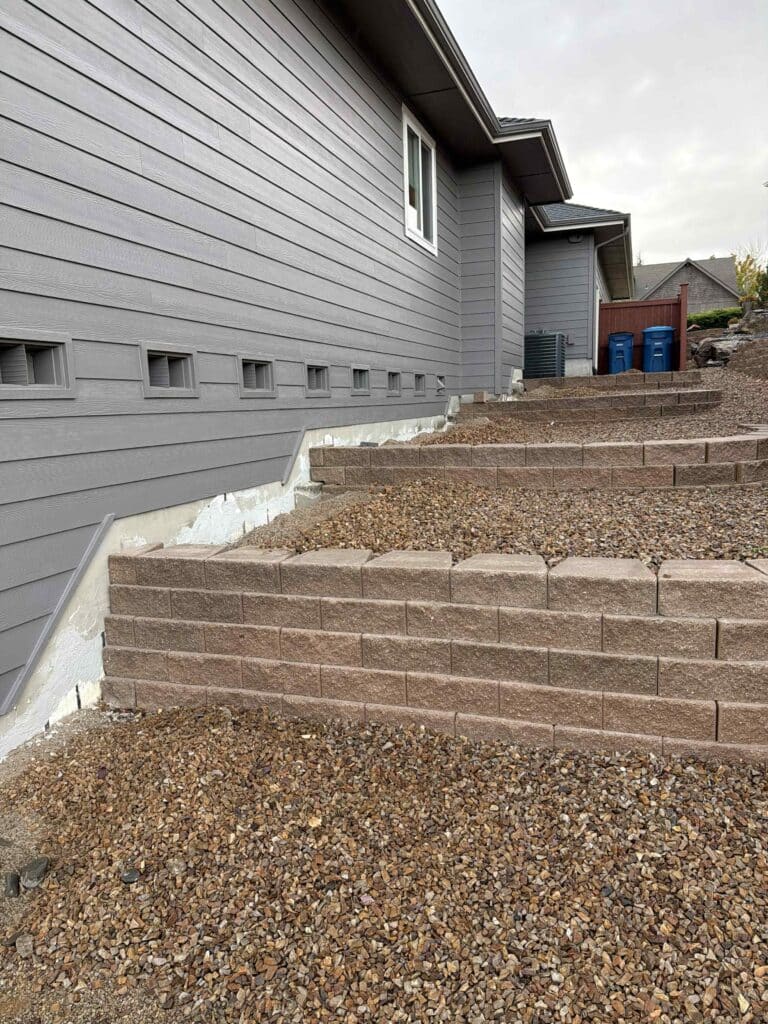
Every material on the outside of your home behaves differently under a brush, ages on its own timeline, and needs its own primer and technique. Treating stucco the same way you’d treat cedar trim is how corners get cut, so we don’t do it. Each surface gets evaluated and handled on its own merits before we start.
That evaluation, matching the right product to the right material and prepping it the way it actually needs, happens before color ever enters the conversation. It’s invisible in a finished photo, but it’s the entire reason one paint job holds up for a decade and another starts peeling within a year.
We’ve been part of the Central Oregon community long enough to know its homes well, new construction going up in Bend right alongside decades-old properties in Redmond, Sisters, Sunriver, La Pine, and Prineville. We show up the same way for all of them.
Every client gets the same standard: clear communication, a schedule we actually keep, and a proposal that lays out precisely what you’re paying for.
A lot of Central Oregon painting projects aren’t a simple repaint of an aging house. New construction throughout Bend and Redmond often needs its first-ever coat rather than a refresh, and that first application sets the tone for how the exterior ages from day one. Ask a builder-focused question here: does the painter regularly work directly with contractors on new builds, or do they mainly handle repaints?
Vacation and rental properties around Sunriver, Black Butte Ranch, and Eagle Crest come with a different wrinkle. These homes often sit unoccupied for stretches with minimal climate control, which puts more stress on a finish than steady daily use does. Ask whether a painter has experience with second homes specifically, and whether they factor in ash and soot cleanup after a heavy wildfire season as part of their maintenance recommendations.
Choosing the right house painter in Central Oregon comes down to three things: asking the right questions up front, working with someone who genuinely understands this climate and its homes, and getting warranty and prep details in writing before you sign. Nail those three, and the rest of the project tends to go smoothly.
Ready to talk through your project? Call Roy Klein and the LIME Painting of Central Oregon team at (541) 631-4098, or request a proposal online, and we’ll walk your property with you before you decide anything.
Get proof of licensing and insurance, find out how they plan to prep your specific surfaces, confirm the number of coats and materials, and ask for references from jobs close in size to yours.
A house painter who knows this region understands how Central Oregon’s high desert sun, dry air, and temperature swings affect different substrates, and how to prep and coat each one so it actually holds up. That knowledge shows up as fewer surprises and a longer-lasting finish. Should you use a paint or stain? These choices will matter over the years.
Look for a defined coverage period, typically two years or longer, that specifically addresses peeling, bubbling, and cracking, put in writing rather than promised verbally. Nail down how a repair would actually get handled before you commit to anything.
It matters more than the paint itself. Rushed or skipped prep is the most common reason we see a paint job fail early, regardless of how good the paint is.
Most homes in Bend, Redmond, and the surrounding area are newer, but homes built before 1978 in older pockets like Old Bend may contain lead-based paint. Any work disturbing that paint should follow EPA-certified lead-safe practices.
Yes. New builds need a first-time exterior finish applied correctly from day one, which is a different job than refreshing an older repaint. Vacation homes that sit empty for stretches at a time can see more stress on their finish, so ask whether your painter has specific experience with second homes and unoccupied properties in Central Oregon.
Compare at least three so you can spot outliers on price and confirm every painter is quoting the same scope of work. A proposal that’s vague on scope is nearly impossible to compare fairly against the others.
A figure tossed out during a quick walkthrough doesn’t tell you much of anything. A real proposal documents each surface being worked on, the prep involved, the products used, the schedule, and the warranty terms, all in writing, before you commit to a thing.
Most of the job happens before color ever touches a wall: cleaning, sanding, and priming, with cleanup and coordination on top for larger jobs. The paint itself is honestly the smallest piece of what you’re paying for.
With solid prep and quality materials, exterior paint out here generally runs eight to fifteen years before it needs redoing, though south and west-facing walls under direct high desert sun often fall on the shorter end of that window. Interiors tend to go longer between refreshes.
New builds sit next to decades-old properties throughout this region, sometimes on the very same street, which means a surprising mix of materials to account for. Getting the finish to hold up here means matching the approach to the specific material, not the neighborhood.
A quick annual walk around your home helps catch small problems, like a cracked caulk line or a fading section, before they turn into bigger repairs. Washing off dust, pollen, or wildfire ash a couple of times a year also protects the finish and keeps it looking newer for longer.
It’s usually easier to fold color into the hiring conversation rather than deciding on your own beforehand. Someone familiar with your home’s design and how the high desert sun hits each side of it can steer you away from a color that looks great on a swatch but wrong on the wall.