





We get called out for a lot of home painting quotes, and it’s not a surprise anymore when we find bad painting contractor work a homeowner is stuck redoing. There’s nothing worse than thinking you finally have a gorgeous, freshly painted house, only to realize months later the job wasn’t done right and you’re starting the whole process over again.
We’re often asked what the most common mistakes are when hiring a painting contractor in Bend, Redmond, and the rest of Central Oregon. The honest answer: almost every failed paint job we inspect traces back to a decision made before any paint was mixed, not the paint itself. That’s exactly what we want to walk you through here, the real differences between painting contractors so you know what to look for before you sign anything.

The way a contractor treats you before you sign a contract tells you exactly how they’ll treat you during the job. We see it constantly: pressure tactics like “this quote is only good today” are a sales script, not a real deal. A contractor who shows up late, dodges direct questions, or gives vague answers about their process is telling you something important. We recommend listening to it.
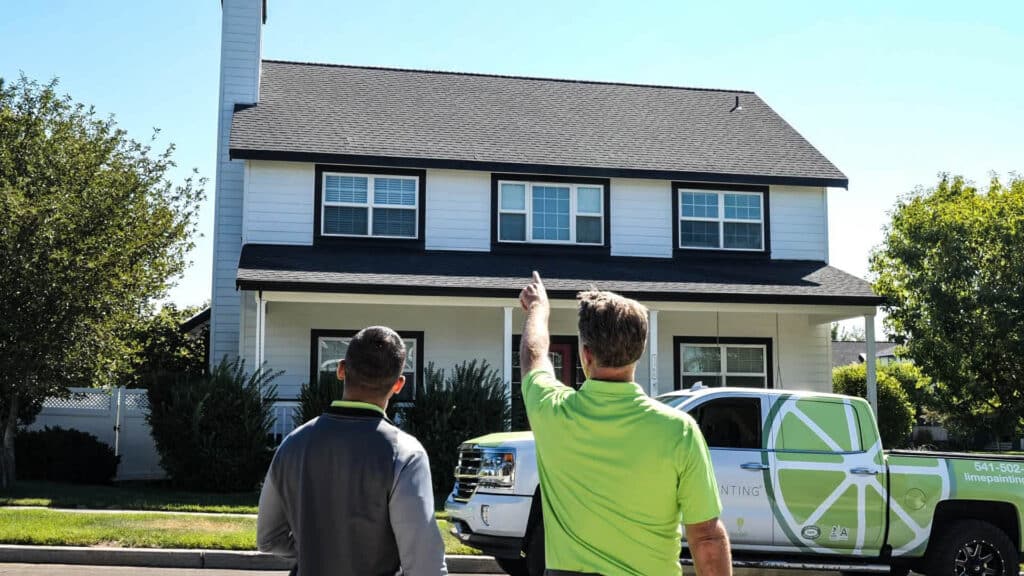
Pay attention to how a contractor talks about your home specifically. When we walk a property, we’re asking about the substrates, what’s already gone wrong, and what your home actually needs, not just measuring square footage and handing you a number.
Most homeowners are surprised how many different surfaces their home actually has once we start pointing them out. Wood trim, stucco, masonry, siding, and stained surfaces all sit side by side, and most people never stop to think about them as separate materials. In our high desert climate, that variety matters even more, since sun-baked wood trim and shaded north-facing siding age at completely different rates on the same house.
Our professional teams are trained to see every one of those variations, so when we look at your house, we’re looking at each surface on its own terms, not treating the whole exterior as one job. If every answer sounds like a script instead of a real conversation about your house, that’s a red flag worth walking away from.
This is the mistake with the highest financial risk attached to it, and it’s the one we get the most questions about. If a painter gets injured on your property and the company has no workers’ compensation coverage, you can be held liable. If they damage your siding, windows, or landscaping and carry no liability insurance, you’re paying for the repair yourself.
We’re licensed, bonded, and heavily insured, and we hand over that documentation without hesitation because we expect homeowners to ask. The FTC’s guidance on avoiding home improvement scams recommends confirming a contractor’s license directly with your state or county rather than taking their word for it, and we tell our own clients the same thing.
A bid that comes in dramatically lower than the others isn’t a deal. It’s a warning. We’ve seen it play out before: the low bidder makes up the difference somewhere, whether that’s thinner paint, fewer coats, skipped prep work, or a crew that isn’t actually trained on the substrate in front of them.
When we get called in to fix a bad paint job, it’s almost always the same story. Little to no surface prep, paint applied straight over failing caulk or peeling substrate, or a finish that starts showing cracks or bubbling almost immediately. Those original savings never hold up once you’re paying to have the work redone, and by then you’re also back to tracking down a contractor, scheduling around your life again, and waiting on a job that should have been finished the first time.
That’s the real value of hiring the right contractor from the start. It gets done once, you’re not chasing anyone down a year later, and you get to stop thinking about it. Treat your project as protection for your home’s largest surfaces, not a line item to shrink.

“Interior painting, two rooms” is not a scope of work, and it’s one of the most common gaps we see when homeowners bring us a competitor’s paperwork for comparison. A proposal we’d stand behind spells out exactly which surfaces are included, how many coats, what prep is planned, and what happens if something unexpected turns up once work begins, like dry rot behind old trim.
Without that detail in writing, you have no way to hold anyone accountable if the finished job doesn’t match what you pictured. We only offer proposals, never a rough number scratched on a business card, because our clients deserve to know exactly what they’re agreeing to before we start.
Anyone can spray paint on a wall. The part that determines whether your paint job lasts five years or fifteen is the prep work nobody sees in the after photos: sanding, scraping, priming, and treating each substrate the way it actually needs to be treated.
This is where we spend most of our time on every project, because a water based product going on top of an old oil based finish, or the wrong prep on masonry versus wood trim, is exactly why paint jobs fail early. Central Oregon’s dry climate adds another layer to this, since wood trim and siding here dry out and move more than they would in a wetter region, and prep work needs to account for that. We recommend asking any contractor to walk you through their prep process for your specific surfaces.
A handful of five star reviews on a contractor’s own website tells you very little. We recommend asking for references from projects similar in scope to yours, ideally full interior or exterior repaints rather than a single accent wall, and actually calling them. Ask how the crew communicated, whether the timeline held, and whether anything needed to be fixed after the fact.
Look at how a contractor responds to any negative reviews you find elsewhere too. How they handle a complaint tells you more about their standards than the complaint itself. We’re proud of our A rating with the Better Business Bureau, and we think that kind of track record should matter to you as much as it does to us.
A verbal promise that “we’ll take care of it if anything goes wrong” isn’t a warranty. Get the coverage in writing: what’s covered, for how long, and what your contractor will do if something fails within that window.
We stand behind our work because we use only top of the line materials and we don’t skimp on product or process. A contractor confident in their materials and their crew’s workmanship will put that confidence on paper without pushback. If they hesitate, that hesitation is your answer.
We see these seven mistakes more than any others, and almost all of them happen in the same place: before the contract is signed. Slow down during the hiring process, ask direct questions, and treat a low bid or a rushed sales pitch as information rather than a bargain. Your home’s exterior and interior surfaces are protecting a significant investment, and we believe the contractor you choose should treat them that way too.
Ready to talk through your project? Book a consultation with LIME Painting of Central Oregon and we’ll walk your home with you and build a detailed proposal around your actual surfaces, not a generic quote. Call Roy Klein and our Central Oregon team at (541) 631-4098, or request a proposal online.
Ask directly for current proof of both general liability insurance and workers’ compensation coverage, then verify the license number with your state or county licensing board. We provide this documentation to every client without hesitation.
A quote significantly lower than others usually means corners are being cut somewhere, whether that’s thinner paint, fewer coats, or skipped surface prep. We’ve seen those shortcuts lead to paint failing early, which costs more to fix than the original savings were worth.
Ask about their licensing and insurance, their surface preparation process for your specific substrates, how many coats they include, their timeline, and whether they offer a written warranty. Also, ask to see their portfolio of photos or video of previous jobs they’ve completed.
We recommend comparing at least three quotes so you can spot outliers on price and scope. Use the comparison to check that every contractor is quoting the same scope of work, not just the same total number.
A solid proposal lists every surface included, the number of coats, the prep work planned, the materials being used, the timeline, and the payment schedule. It should also spell out how any change to the original scope will be handled.
No. A licensed, established painting contractor purchases materials directly through their own accounts with paint suppliers. We’ve never asked a client to buy paint themselves, and being asked to do so is worth a follow up question.
Look for a written warranty that covers peeling, bubbling, and cracking for a defined period, typically two years or more depending on the scope of work. We recommend asking exactly what’s covered and how repairs will be handled before you sign.
Yes. Central Oregon’s intense high desert sun and dry air put more stress on exterior paint than a milder, wetter climate does, and homes here often need a repaint sooner than the standard eight to fifteen year range. Asking a contractor how they account for local climate is worth adding to your questions list.
A painting contractor manages every stage of a paint job, from surface prep and priming to the final coats and cleanup. For larger projects, we also coordinate crew scheduling, material ordering, and any repairs to the substrate underneath.
A quick number scratched out during a walkthrough tells you very little. A proposal lays out the full scope of work in writing, including materials, prep steps, and timeline, so you know exactly what you’re agreeing to before any work begins.
A properly prepped and applied exterior paint job typically lasts eight to fifteen years depending on your climate and substrate, though Central Oregon’s high desert sun and dry air tend to push homes toward the shorter end of that range without the right prep. Interior paint can last even longer with minimal touch ups. Skipped prep work is the most common reason we see a paint job fail well before that range.
Larger homes often have a wider mix of substrates, such as wood trim, stucco, masonry, and specialty finishes, each requiring its own prep and coating approach. We treat every substrate differently for exactly this reason, because using one approach across a whole home is one of the fastest ways a paint job underperforms.