





Cabinet painting costs less and gives you any color you want, while cabinet refinishing costs more but restores and protects the real wood grain underneath. For most Central Oregon kitchens, the right call comes down to two things: what your cabinets are actually made of, and how well they have held up to our dry, high desert air. Here is how to tell which option is the smarter move for your home.
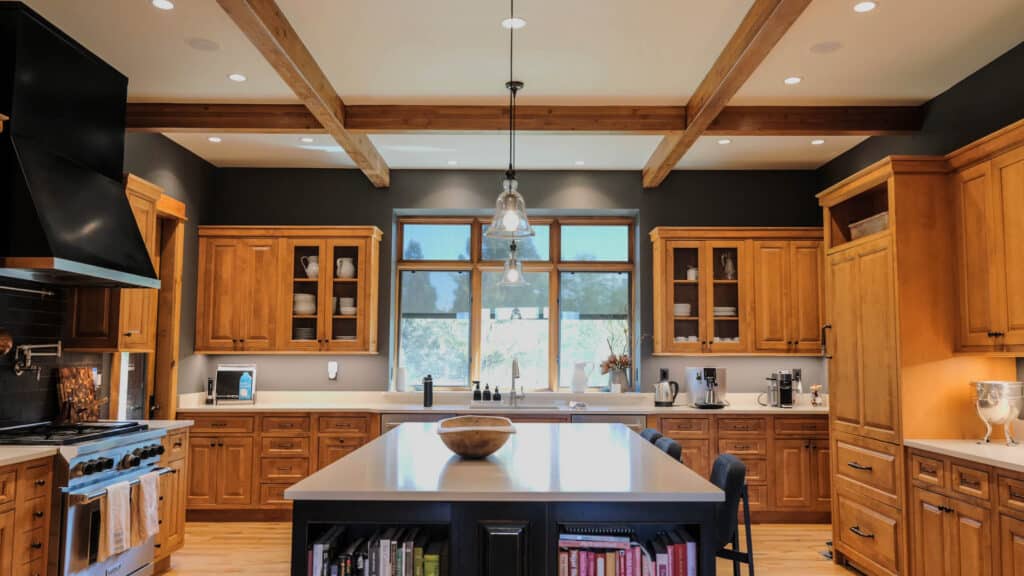
The two terms get used interchangeably by a lot of homeowners, but they are genuinely different processes with different results. Painting covers your cabinets in a new color. Refinishing works with what is already there, the real wood underneath, and restores it instead of hiding it.
Cabinet painting means cleaning, sanding, and priming your existing cabinet doors and boxes, then applying a cabinet-grade enamel in any color you choose. It works on real wood, and on many laminate or thermofoil surfaces too, as long as the right primer bonds to the material first. This is the option to reach for when you want a completely different look, not just a refresh of what is already there.
Refinishing strips your cabinets down to bare wood, then rebuilds the finish with stain, sealer, and a protective topcoat. It only works on solid wood or wood veneer, since there is no real grain to reveal underneath laminate. This is the option for homeowners who love their wood cabinets and just want them looking new again.
Cabinet painting typically runs $8 to $18 per square foot of cabinet surface, depending on the condition of your cabinets and how many coats the job needs. Cabinet refinishing runs higher, usually $15 to $25 per square foot, since stripping old finish and matching stain color takes more time than painting over what is there. Either number moves with the size of your kitchen and how much prep work your cabinets actually need.
Materials tell a similar story. Painting typically uses $300 to $700 in primer and cabinet-grade enamel. Refinishing usually runs $500 to $1,000 or more in strippers, stain, sealer, and a clear protective topcoat.
A quality cabinet paint job typically holds up for 8 to 12 years before it needs a refresh. A professional refinish tends to last longer, usually 10 to 15 years, since the process rebuilds the wood’s own protective layer instead of just covering it. Either number drops fast if the prep work gets rushed, since a finish is only as durable as what is underneath it.
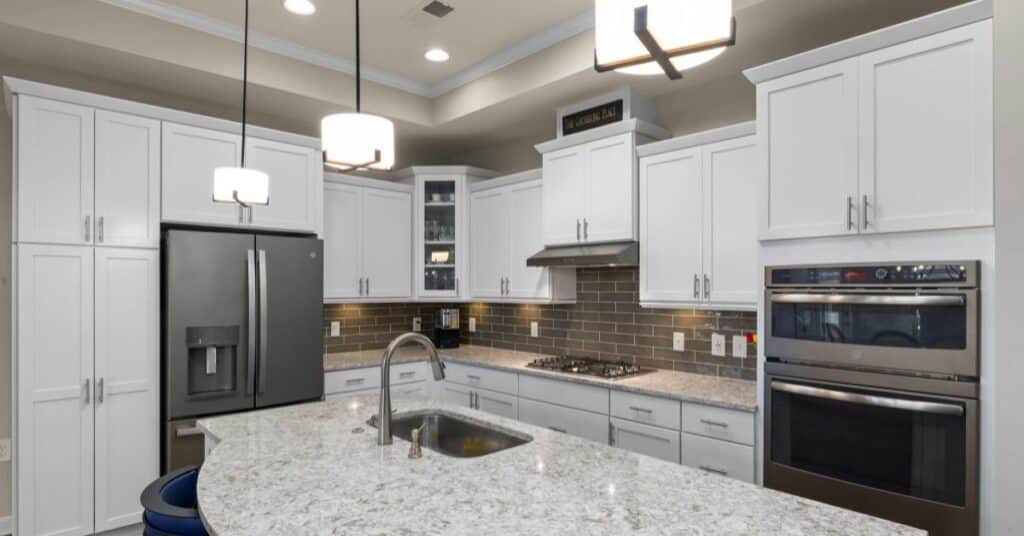
Wood is hygroscopic, meaning it constantly gives up and absorbs moisture based on the air around it. The USDA Forest Products Laboratory notes that a protective coating can slow this movement but never fully stop it, and Central Oregon’s dry, high desert air puts real wood cabinets through more of this cycle than a milder, wetter climate does.
Add in winter heating season, when indoor humidity in a Bend or Redmond home can drop even further, and cabinet doors and drawer fronts see real seasonal movement. That movement shows up as hairline cracks at the joints on a standard enamel paint job faster than it does on a properly refinished or catalyzed finish. This is one reason a refinish, done with the right materials, tends to age better than a basic repaint in our climate specifically.
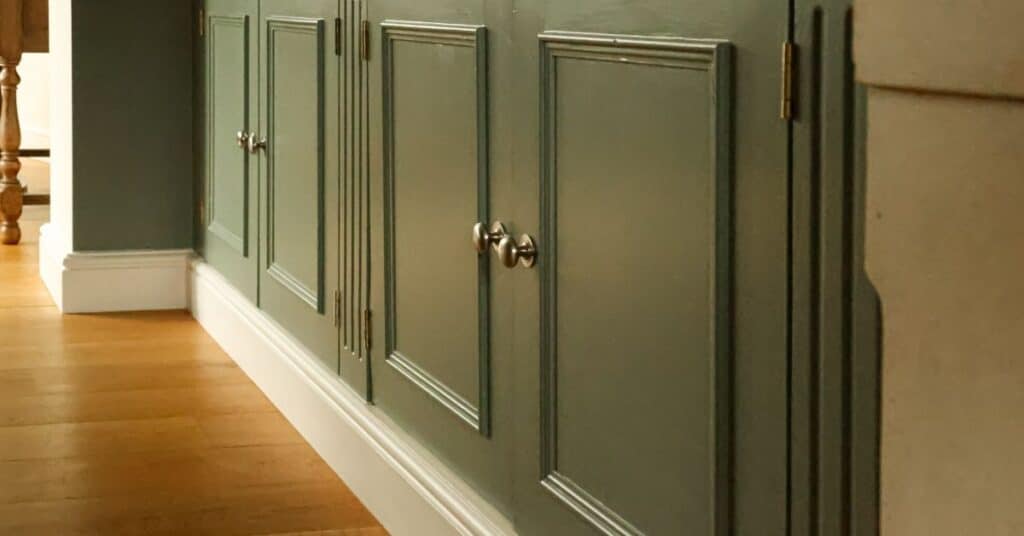
A lot of newer Central Oregon homes, especially recent builds in NorthWest Crossing, Redmond, and Sisters, use laminate or thermofoil cabinet boxes instead of solid wood. There is no real wood grain hiding under that surface, so refinishing is not an option no matter how much you would prefer it. Painting is the only path forward here, and it works well as long as your contractor uses a primer built to bond to laminate specifically.
Solid wood and wood veneer cabinets are the only real candidates for refinishing. If you are not sure what you are working with, a quick inspection from a painting contractor will tell you in a few minutes.
Start with what your cabinets are made of, since that alone rules one option in or out. From there, ask whether you want a completely different color or just a restored version of the wood you already have.
Painting wins on budget and color range. Refinishing wins when you love your existing wood grain and just want it looking new again. Either way, condition matters more than preference if your cabinets have water damage or structural issues paint and stain cannot fix.
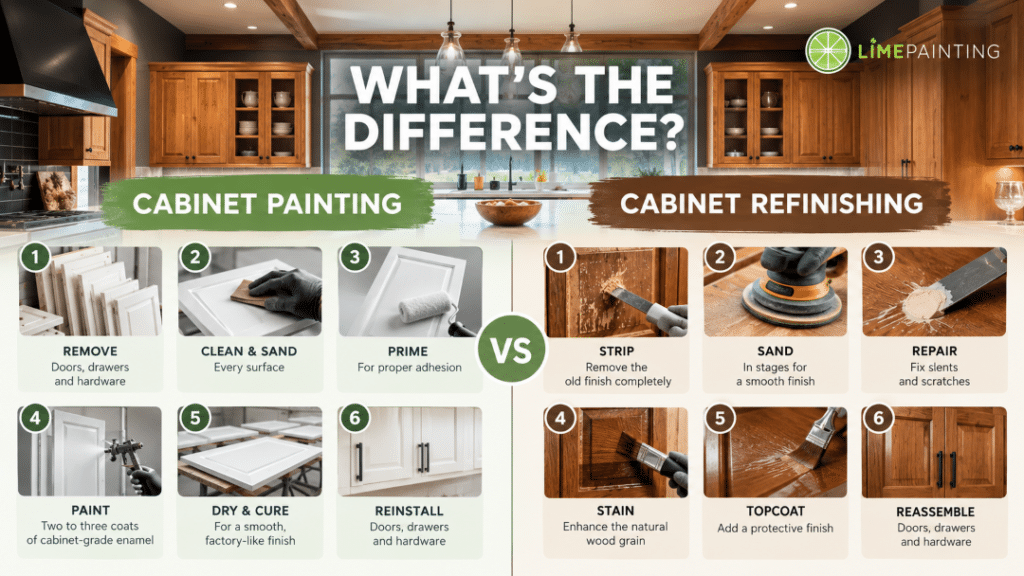
A professional cabinet painting job starts with removing doors, drawers, and hardware, then cleaning and sanding every surface. Primer goes on first, followed by two to three coats of cabinet-grade enamel, usually sprayed rather than brushed for a smooth, factory-like finish. Most kitchens are back in business within a week.
Refinishing takes longer. The old finish gets stripped completely, the wood gets sanded in stages, and any dents or scratches get repaired before stain and a protective topcoat go on. Depending on the size of your kitchen, plan on two to five days longer than a comparable paint job.
Cabinet painting and refinishing both look approachable online, but the details that separate a factory-quality finish from a visibly amateur one are almost all in the prep work. A missed step in cleaning or sanding shows up months later as chipping or peeling, right where you look every single day. Professional cabinet crews also spray in a controlled setting, which a DIY brush-and-roll job in an open kitchen simply cannot match for smoothness.
That said, plenty of homeowners handle a single small vanity or bathroom cabinet set themselves with good results. The math shifts once you are talking about a full kitchen, where the square footage, the number of doors and drawers, and the risk of a mismatched color across cabinets make professional application worth the cost. If you decide to bring in a pro, ask to see finished cabinet work specifically, not just wall painting, since the two skill sets do not fully overlap.
A meaningful share of Central Oregon’s housing includes vacation homes and short-term rentals around Sunriver, Black Butte Ranch, and Eagle Crest, properties that see less daily wear but sit empty for stretches at a time with the heat running low or the home closed up entirely. That kind of on-and-off climate control can be tougher on real wood cabinets than steady daily use, since the moisture swings happen in bigger jumps. A durable, properly prepped finish matters even more here, since nobody is around to catch an early crack before it spreads.
Both options can genuinely transform a tired kitchen without the cost or mess of a full remodel. The right one for your Central Oregon home comes down to what your cabinets are made of, how they have held up to our dry climate, and whether you want a new color or a restored original.
Not sure which option fits your kitchen? Call Roy Klein and the LIME Painting of Central Oregon team at (541) 631-4098, or request a proposal online, and we will take a look before you decide anything.
Cabinet painting applies a new color of cabinet-grade enamel over your existing cabinets. Cabinet refinishing strips the old finish completely and rebuilds it with stain and a protective topcoat, keeping the real wood grain visible. Painting works on almost any material, while refinishing only works on solid wood or wood veneer.
Yes, painting is usually the more affordable option, typically running $8 to $18 per square foot compared to $15 to $25 for refinishing. The gap comes from labor, since stripping old finish and matching stain color takes longer than painting over what is already there. Your exact cost depends on your kitchen’s size and how much prep work it needs.
A professionally refinished cabinet typically holds up for 10 to 15 years with normal use. That number depends heavily on prep work, since thin or rushed sanding shortens the lifespan significantly. Central Oregon’s dry climate can also affect how long any finish lasts on real wood cabinets.
No, refinishing only works on solid wood or wood veneer, since the process relies on real wood grain underneath the old finish. Laminate and thermofoil cabinets, common in a lot of newer Central Oregon builds, need to be painted instead. A primer built to bond to laminate is essential for that paint job to hold.
Yes. Wood constantly gives up and absorbs moisture based on the surrounding air, and Central Oregon’s dry, high desert climate puts real wood cabinets through more of that movement than a wetter region would. A properly refinished or catalyzed finish tends to handle that movement better than a standard painted enamel.
Refinish if you have solid wood cabinets you genuinely like and just want restored. Paint if you want a completely different color, have a tighter budget, or your cabinets are laminate or thermofoil. Either option beats a full cabinet replacement on both cost and timeline.
A professional cabinet painting job usually wraps up within a week. Refinishing typically takes two to five days longer, since stripping and staining the wood adds steps a paint job skips entirely.
A catalyzed finish uses a chemical hardener mixed into the coating, which cross-links as it cures into a harder, more durable surface than standard latex or oil paint. Professional cabinet refinishers use these finishes specifically because they hold up better to daily kitchen wear. They are also more resistant to the moisture swings common in Central Oregon’s dry climate.
Solid wood and wood veneer cabinets can be either painted or refinished. Laminate, thermofoil, and melamine cabinets can only be painted, and only with a primer designed to bond to those slick, non-porous surfaces. A quick material check before you start saves a lot of wasted time and money.
Professional cabinet painters use HVLP spray equipment instead of a brush and roller, which eliminates the brush marks and roller texture that show up on close-up cabinet surfaces. Spraying also lays down a thinner, more even coat, which dries harder and resists chipping better over time. This is the biggest difference between a factory-quality cabinet finish and a DIY paint job.
Wait the full cure time your painter recommends before hanging doors and using cabinets normally, usually a few days to a week depending on the product. Wipe spills quickly and avoid harsh abrasive cleaners on the new finish. Central Oregon’s dry indoor air in winter can also dry out wood over time, so a light furniture wax on real wood cabinets once a year helps keep the finish flexible.